

01The client and context
Global Brands Express imports German gourmet food into the United States and sells to restaurants, delicatessens, and grocery buyers.
02The problem
The business needed a professional storefront that could present a wide product range and support wholesale purchasing rather than only browsing.
03The constraint
A wholesale catalogue and a retail catalogue want opposite things. A restaurant buyer arrives knowing the category and the case quantity and wants to get to it in two clicks; a curious shopper wants to be led. Building only for one loses the other, and the buyer with the purchase order is the one who pays.
04The strategic decision
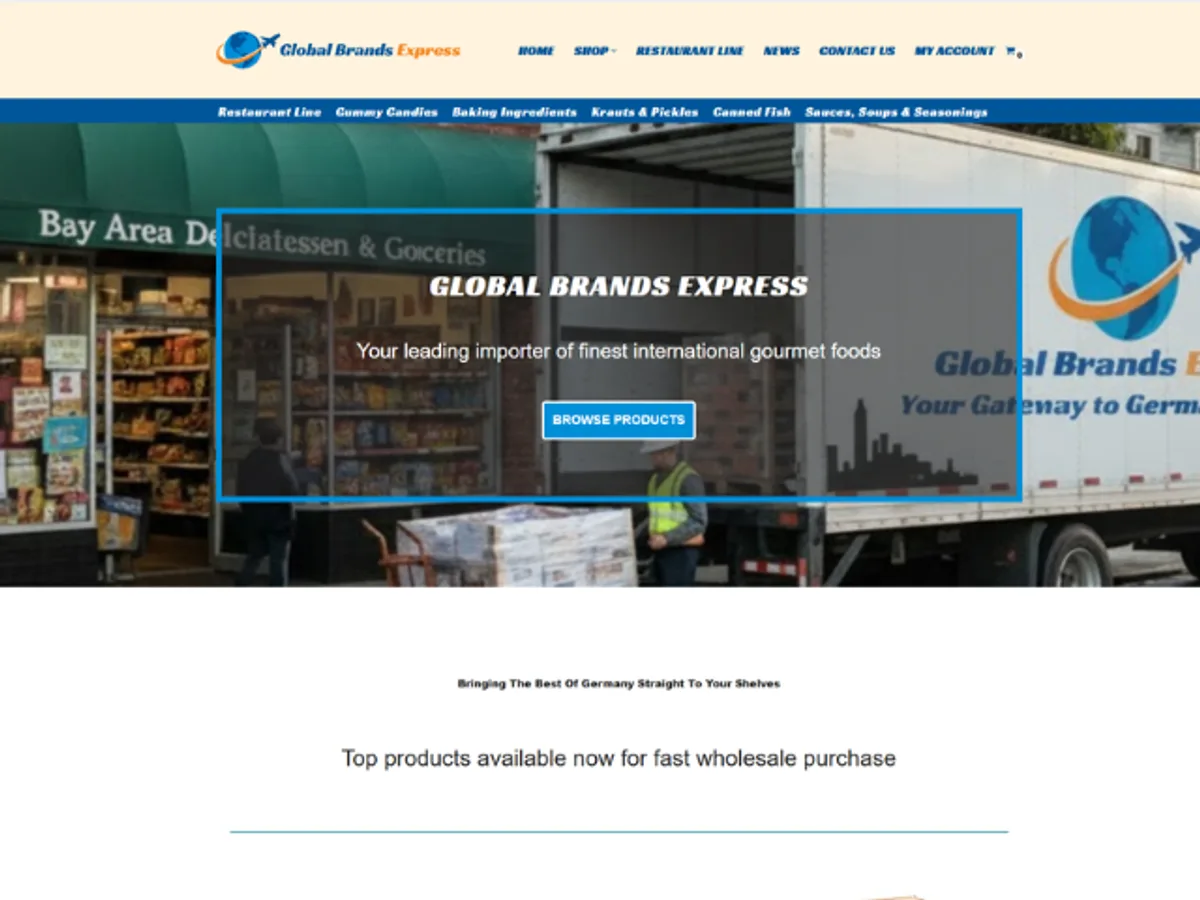
Organise the site around product category first, since that is how a buyer already thinks about the order. Categories sit in persistent navigation, the import story establishes provenance without blocking the path to product, and the wholesale route is explicit rather than hidden behind a contact form.
05The system created
- E-commerce storefront with a persistent product category structure
- Category navigation matching how buyers order — restaurant line, baking ingredients, preserves, canned goods, seasonings
- Wholesale purchasing path
- Account access for returning buyers
- Provenance and import positioning
06Rosecraft responsibilities
- Website design and development
- Information architecture for a wide product catalogue
- E-commerce and account structure
- Positioning for a business-to-business buyer
On measured results
No performance figures are published for this project. Rosecraft only states an outcome when it has been measured over a defined period, attributed to a named source, and cleared by the client. Until then the evidence is the decision logic and the system itself.
What this demonstrates
Business-to-business catalogues fail when they are designed for browsing. The buyer already knows what they want; the job is to remove the clicks between them and the case quantity.